Last updated October 15, 2026
ADU Permits, Codes & Inspections in CA: What You Need to Know
AB 2221 was supposed to cap ADU permit processing at 60 days. But the clock doesn’t start ticking until the city stamps your application “deemed complete” – a determination that Fresno, like many California cities, controls entirely. One missing sheet, one outdated site plan, one unclear roof-height note, and your 60-day clock resets to zero while your project sits in a queue you can’t see. This guide walks through the real sequence of permits, codes, and inspections for an ADU in Fresno: what the state requires, where the city still has discretion, what inspections actually trip people up, and how to keep a project moving without burning a season waiting on plan check.
Quick Answer
An ADU in Fresno requires a building permit from the City of Fresno Planning and Development Department, plan approval under the 2022 California Residential Code (with local amendments), and a sequence of inspections – foundation, framing, rough electrical/plumbing/mechanical, insulation, and final – before you get a certificate of occupancy. Most projects take 4 to 9 months from first submittal to final inspection, depending on whether the ADU is a prefab, a garage conversion, or a ground-up build. The state sets the ceiling on what cities can demand; Fresno sets the actual paperwork, fees, and inspection rhythm.
Table of Contents
- California ADU Law: What the State Actually Guarantees
- Fresno’s Permit Process, Step by Step
- What “Deemed Complete” Really Means – and How to Get There Faster
- ADU Types in Fresno: Different Tracks, Different Fees
- Plan Check Corrections: How to Respond Without Restarting Your Timeline
- Fresno Inspections: The Sequence and the Sticking Points
- Common Mistakes to Avoid
- When to Call a Professional
- Frequently Asked Questions
- The Bottom Line
California ADU Law: What the State Actually Guarantees

California’s ADU statutes – Government Code Sections 65852.2 and 65852.22, plus the follow-on cleanup bills like AB 68, AB 881, SB 13, and AB 2221 – were written to strip away most of the reasons cities historically said no to accessory dwelling units. The law says a city shall approve an ADU that meets objective development standards. It caps the review window at 60 days from a complete application. It caps impact fees based on ADU size. It prohibits owner-occupancy requirements through 2030. It forces cities to allow ADUs on any lot zoned single-family or multifamily. Those are real, enforceable rights.
But here’s the part most guides skip: the state sets a floor, not the whole playbook. Cities still write their own objective standards for setbacks, height, lot coverage, parking, and design review. They still choose how strictly to interpret “compatible with the existing neighborhood.” They still decide what goes on the plan check correction list. In Fresno, that means you’re working with the City of Fresno’s ADU ordinance, not just the state code. And the local rules sit inside a process – online submittal through the city’s permit portal, plan review by city staff, inspections scheduled through the same portal – that has its own rhythm, backlog, and habits.
What this means for a homeowner: don’t assume that because state law says “60 days,” your project will be framed in two months. It means the 60-day clock only runs once the city accepts your package as complete. Everything before that is preparation, and everything after that depends on how clean the plans are the first time they hit the reviewer’s desk.
One thing that helps: working with a team that builds ADUs in Fresno regularly. For example, our team at ADU Builders in Fresno has shepherded enough packages through the city’s portal to know where the common correction triggers live. For homeowners who want more than a standalone unit, Home Addition Contractor in Fresno work shares some of the same permit logic but with a different fee and inspection path. And if you’re converting existing square footage rather than building new, the Garage Conversion Contractor in Fresno track has its own set of structural upgrade triggers we”ll get into below.
Fresno’s Permit Process, Step by Step
Here’s the sequence as it plays out in Fresno, not as the state bill describes it. We’ve walked this path dozens of times. The steps below reflect how the City of Fresno Development and Resource Management Department currently handles ADU applications.
- 1
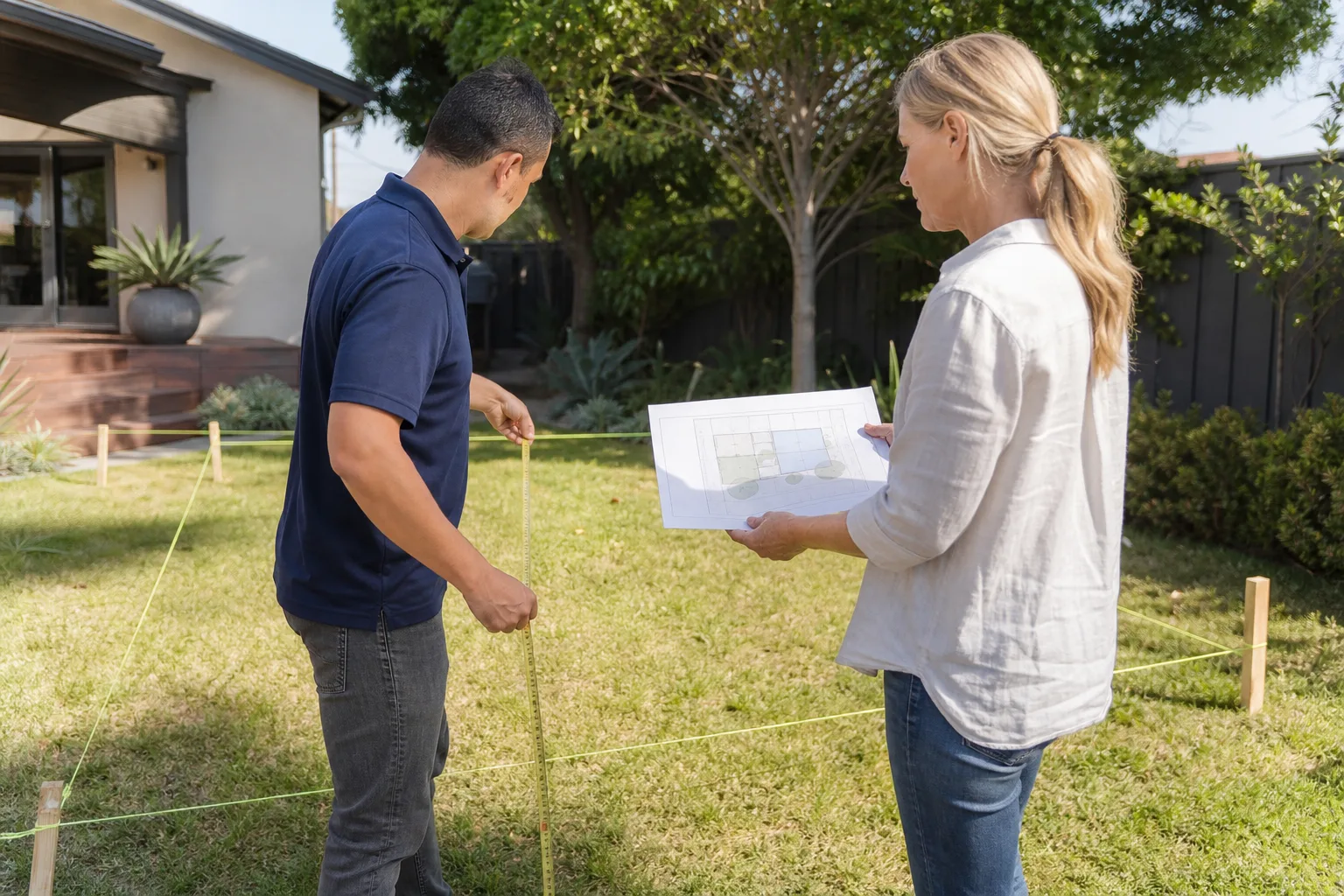
Pre-application check (week 1 – 2). Pull your property’s zoning, check for any overlay districts, verify your water and sewer connections. In Fresno, older neighborhoods like Tower District and parts of Central Fresno have different sewer lateral conditions than newer subdivisions in Woodward Park or Harlan Ranch. This step is where surprises live.
- 2
Site plan and floor plan drafting (weeks 2 – 5). This is where a designer or ADU builder turns your lot into drawings: setbacks drawn to the inch, roof heights, window placements, utility runs. Prefab manufacturers like Dvele and Mighty Buildings ship with their own stamped plans, which can cut this stage significantly.
- 3
Submittal through Fresno’s online permit portal (week 5 – 6). You upload plans, calculations, energy compliance docs (Title 24), and pay the plan check fee. The city’s portal is where all communication lives from here forward.
- 4
Completeness review (10 – 30 days). City staff check for missing items. If anything is absent, they send a correction notice. The 60-day clock has not started yet.
- 5
Deemed complete determination (day 1 of the 60-day clock). Once the city accepts the package, the statutory clock starts. Fresno issues a formal notice.
- 6
Plan check review (30 – 60 days from deemed complete). A plans examiner reviews structural, electrical, plumbing, mechanical, and energy compliance. Correction notes come back through the portal.
- 7
Corrections and resubmittal (1 – 4 weeks per round). You respond to each note, update plans, and resubmit. Each round does not restart the 60-day clock, but it does pause it.
- 8
Permit issuance (1 – 2 weeks after final approval). You pay remaining fees, pull the physical permit, and get the green card posted on the job site.
- 9
Inspections (2 – 6 months during construction). The sequence runs foundation, framing, rough MEP, insulation, and final. Each inspection is scheduled through the portal, typically with a 1 – 3 day window.
- 10
Certificate of occupancy (final inspection passed). Once the final inspector signs off, the ADU is legal to occupy. This is the document that matters for insurance, refinancing, and resale.
In our experience, the realistic calendar from first submittal to certificate of occupancy in Fresno runs 5 to 9 months for a ground-up detached ADU. A garage conversion can run faster – 4 to 6 months – because there’s no foundation inspection and the structural shell already exists. A prefab from Boxabl or Plant Prefab can compress the front end because the manufacturer’s engineering package is already stamped, but the local site work and utility connections still run on Fresno’s inspection schedule.
What “Deemed Complete” Really Means – and How to Get There Faster
The phrase “deemed complete” is the legal hinge of the entire ADU permit timeline. Government Code Section 65943 says a city has 30 days to tell you whether your application is complete or incomplete. If the city fails to respond within 30 days, the application is automatically deemed complete by operation of law. Once complete, the 60-day review clock starts. If the city misses that deadline, the permit is supposed to be approved. Those are strong statutory protections.
But a city controls the completeness determination in two practical ways. First, it can send a correction letter on day 29 listing six items that need fixing. Your clock pauses. You fix them, resubmit, and another 30-day completeness review begins. A project can sit in this loop for months. Second, the city decides what counts as “complete.” The state lists minimum submittal requirements, but Fresno’s actual checklist – available on the Planning and Development Department’s ADU page – includes items like a Title 24 energy compliance report, a site plan drawn to scale with all setbacks dimensioned, structural calculations if you’re converting a garage, and a signed owner-builder verification if you’re not using a licensed contractor.
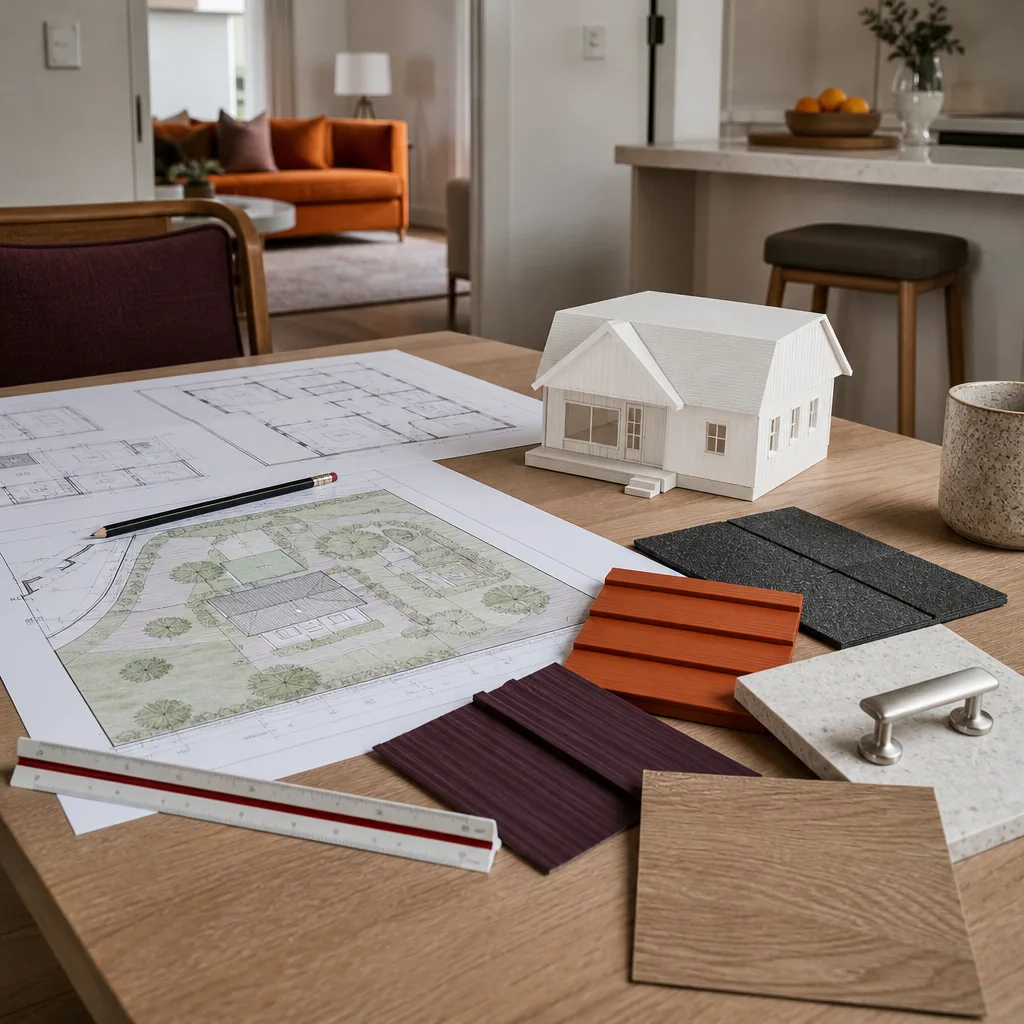
The practical way to avoid the completeness loop: submit a package that anticipates every item on the city’s checklist before the reviewer has to ask for it. The homeowners who move fastest through Fresno’s portal are the ones whose first submittal includes the following, all in one PDF package:
- Site plan at 1/4-inch scale, showing lot lines, setbacks, ADU footprint, driveway access, and all existing structures
- Floor plan with dimensions, window and door schedules, electrical layout, and plumbing fixture locations
- Elevation drawings showing building height, roof pitch, and exterior materials
- Title 24 energy compliance report (prepared by a certified energy analyst)
- Structural calculations – especially for garage conversions, where the existing slab and walls need to be verified for load
- Water, sewer, and electrical utility connection details
- Stormwater / drainage plan if the ADU adds more than 500 square feet of impervious surface
- Owner-builder verification form if you’re not hiring a licensed general contractor
A complete package is a political statement. It tells the plans examiner that you understand the rules, and it moves you to the front of the “clean submittals” pile. We tell every Fresno homeowner we meet the same thing: the fastest permit is not the one submitted earliest – it’s the one submitted with nothing missing.
ADU Types in Fresno: Different Tracks, Different Fees
Not all ADUs in Fresno go through the same permit track. The type of unit you build – detached, attached, garage conversion, or JADU – determines which codes apply, which fees get charged, and which inspections the city requires. Understanding the differences before you draw a single line can save thousands.
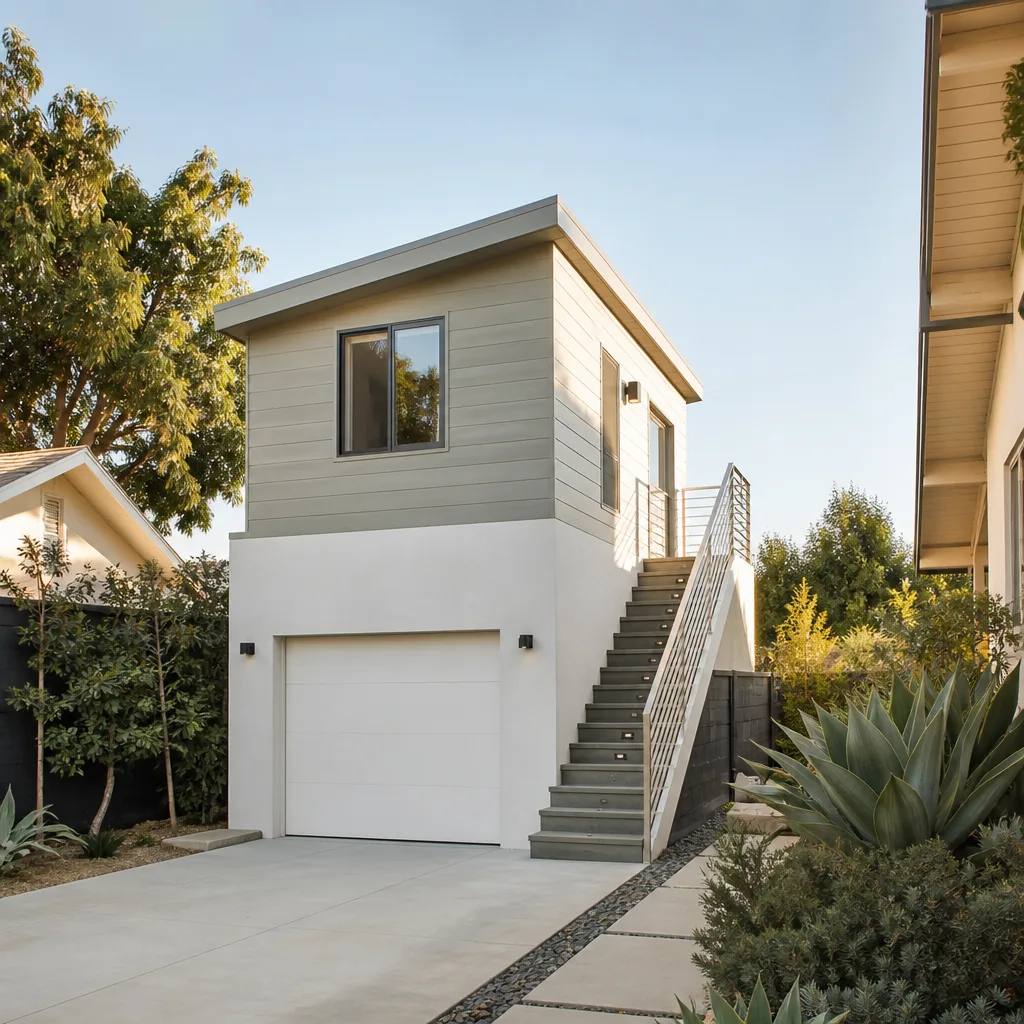
Detached ADU. A standalone structure in the rear or side yard, up to 1,000 square feet (or larger if the lot allows). Detached ADUs in Fresno require the full inspection sequence: foundation, framing, rough-in, insulation, final. They also trigger a school impact fee unless the ADU is under 750 square feet. Because the structure is new from the ground up, the plan check is more detailed – full structural, full energy, full site drainage.
Attached ADU. An addition attached to the primary dwelling, sharing at least one wall. The construction code is the same as a standard home addition, but the ADU portion gets a separate kitchen and entrance. Attached units share utility connections with the main house, which simplifies some of the utility plan check, but the structural detail at the connection point between old and new construction is where reviewers focus their attention. The home addition side of our business deals with this junction constantly.
Garage conversion. Converting an existing attached or detached garage to living space. This is the wildcard track. If the garage was legally built and the structure is sound, the permit path is shorter – no foundation inspection, no new framing inspection for existing walls. But if the garage was built before current earthquake codes, or if the slab is thinner than 3.5 inches, or if the roof framing was never engineered for living loads, the city will require a structural upgrade package. That can mean new footings, shear wall retrofits, or even a full rebuild of the garage shell. The garage conversion permit path is where we see the widest swing in cost and timeline in Fresno.
Junior ADU (JADU). A unit of no more than 500 square feet created entirely within the existing walls of the primary home. No kitchen required – a JADU can have a kitchenette. No separate parking required. No new utility connections. The permit is simpler and the fees are lower. But the JADU must share the main house’s address, and it can’t be sold separately.
Fee structures differ by type. Fresno charges building permit fees based on valuation, plan check fees (typically a percentage of the building permit fee), development impact fees, and school fees where applicable. A detached ADU under 750 square feet escapes school fees entirely. A garage conversion might require a sewer lateral inspection fee if the city requires proving the existing lateral is in good condition. A JADU pays the lowest fees of all because it creates no new square footage. Ask the city for a fee estimate before you commit to a track – the numbers differ enough to influence the decision.
Plan Check Corrections: How to Respond Without Restarting Your Timeline
Plan check corrections in Fresno come back through the online portal as a numbered list, each item referencing a code section. The temptation is to panic and start calling the city. Don’t. The correction list is not a rejection. It’s a work order. Every Fresno ADU we’ve permitted has come back with at least one round of corrections. The question is whether that round takes you three days or three weeks.
Here’s what we’ve learned about responding to Fresno corrections efficiently:
- Read every item against the code section cited. The reviewer is telling you exactly what they need to see. If the note says “Provide shear wall schedule per CRC Table R602.10.3(2),” that’s not a suggestion – it’s a specific table from the California Residential Code. Get the table, adapt the plan, and note it in your response letter.
- Respond to every item in writing, in order. Your resubmittal should include a point-by-point response letter: “Item 3: shear wall schedule added to Sheet S-2, detail B.” The reviewer checks off your list faster if they don’t have to hunt through the drawings.
- Update the plans, not just the letter. Every correction requires a plan change. A letter that says “we’ll do this in the field” gets rejected. The plans are the legal document.
- Resubmit within days, not weeks. The reviewed plan set is still warm in the reviewer’s mind. A resubmittal that lands a week after the correction letter will go back to the same reviewer and move faster than one that lands a month later.
- Don’t argue unless the note is clearly wrong. If the reviewer cites a code section that doesn’t apply – it happens – respond politely with the legal basis. But if the note is a judgment call, fix it and move on. The time you spend fighting one item usually exceeds the time to comply.
One persistent myth: that each correction round restarts the 60-day clock. It doesn’t. The clock pauses when the city sends corrections and resumes when you resubmit. What does reset is the completeness review if the city determines your resubmittal is still missing required items. Keep the response package airtight, and the clock keeps running in your favor.
Fresno Inspections: The Sequence and the Sticking Points
Once the permit is issued and construction starts, the inspection sequence begins. Fresno requires the following inspections for most ADU projects, in this order:
- Foundation inspection. Before concrete is poured. The inspector checks rebar spacing, forms, anchor bolts, and depth. In Fresno’s expansive clay soils, foundation details matter more than in coastal cities – the inspector will verify that the footing depth matches the soil report.
- Framing inspection. After walls and roof are framed but before insulation or drywall covers anything. This is the biggest single inspection. The inspector checks shear wall nailing, hold-downs, roof framing connections, and fire blocking.
- Rough electrical, plumbing, and mechanical inspection. After wiring and piping are run but before walls are closed. The inspector checks wire gauge, circuit placement, drain slopes, vent routing, and gas line pressure.
- Insulation inspection. After insulation is installed but before drywall. Fresno’s climate zone 13 requires specific R-values – R-38 in ceilings, R-19 in walls.
- Final inspection. Everything done: drywall, fixtures, flooring, paint. The inspector checks the finished work, verifies all previous sign-offs, and if all is well, signs the final card and clears the certificate of occupancy.
Where Fresno inspections most often fail on first visit, based on what we’ve seen across the city:
- Shear wall nailing pattern. California’s seismic code is strict, and Fresno’s inspectors check nail spacing carefully. A nail pattern at 6 inches on center when the plan called for 4 inches will fail the framing inspection.
- Hold-down hardware at the foundation. Missing or under-specified hold-downs at wall corners are a common catch. These get bolted into the foundation before the pour – if they’re wrong, it’s a concrete fix, not a framing fix.
- GFCI and AFCI protection. The 2022 NEC requires arc-fault protection on nearly all living-space circuits and ground-fault protection anywhere near water. Missing one AFCI breaker in a bedroom circuit will fail the rough electrical.
- Drain slope and venting. Bathroom and kitchen drains need a quarter-inch per foot slope. A flat section in a long run – common in garage conversions where the slab is fixed – will fail the rough plumbing.
- Title 24 insulation documentation. The inspector checks the R-value, but they also check that the installed product matches the Title 24 compliance report. Substituting a cheaper batt than what the energy report lists will fail insulation.
Before each inspection, have the approved plan set on site, the permit card visible, and for a ground-up build, the soil report ready. Inspectors want to see that the work matches the approved drawings. If there’s a deviation not in the plans, it will be caught.
Costs, Timelines, and Realistic Budget Ranges for Fresno ADUs
Homeowners deserve real numbers before they make decisions. Here’s what ADU projects in Fresno are running, based on the projects we’ve priced and built around the city in the last few years.
Permit and impact fees:
- Plan check fee: $800 – $1,800, depending on project size and type
- Building permit fee: $1,500 – $4,500, scaled to construction valuation
- School impact fees: $0 for ADUs under 750 square feet; $2,500 – $4,500 for larger units
- Water/sewer connection fees: $500 – $2,000 if a new connection is required
- Total city fees: typically $3,000 – $8,000 before a single board is cut
Construction costs:
- Garage conversion ADU: $120,000 – $200,000 for a 400 – 500 square foot unit, depending on structural upgrades, kitchen scope, and finish level
- Detached ground-up ADU: $200,000 – $350,000 for an 800 – 1,000 square foot unit
- Prefab ADU shell (Dvele, Mighty Buildings, Boxabl, Plant Prefab): $80,000 – $180,000 for the factory-built component, plus $40,000 – $90,000 for site work, foundation, utilities, and assembly in Fresno
- JADU conversion inside existing home: $60,000 – $120,000, mostly kitchenette, bathroom, and separation wall work
These are real ranges for the Fresno market, not statewide or Bay Area numbers. Fresno labor runs roughly 25 – 35% below Los Angeles and the Bay Area, which is why so many Central Valley homeowners can afford an ADU that would be out of reach in a coastal market. But material costs – lumber, windows, mechanical – run the same everywhere. Don’t let a Bay Area cost guide anchor your expectations for a Fresno project.
The timeline for a garage conversion runs 5 – 8 months from design to occupancy. A detached ground-up ADU runs 7 – 12 months. A prefab can compress the middle by 2 – 3 months if the site work starts while the factory build is underway. None of these are same-day projects, and anyone who promises an occupied ADU in 90 days from bare dirt is selling a fantasy or skipping an inspection.
Lodgewick ADU Fresno was founded in 2010 as part of the Kingswell family of home-service companies. Every project we take on – including every Lodgewick ADU Fresno home build – operates under The Kingswell Guarantee: a written price before work begins, a defined arrival window, a clean job site, and a written guarantee on every job, with a free return visit if the work fails within the 365-day guarantee period. It’s a small map of how the build goes, and we put it in writing before a single nail is driven.
Common Mistakes to Avoid
- Submitting before the Title 24 report is ready. The energy compliance report is a required submittal in Fresno. Submitting without it guarantees a completeness correction and a stalled clock. Get the energy analyst’s report before you upload anything.
- Treating garage conversions like a cosmetic remodel. A garage built in the 1960s or 1970s in Fresno was not engineered for living loads. Skipping the structural evaluation before designing the conversion means the city will catch it in plan check and send you back to square one. Hire a structural engineer on the front end.
- Ignoring the sewer lateral condition. Fresno’s older neighborhoods – Tower District, Huntington Boulevard, Central Fresno – have aging sewer laterals. Adding an ADU adds demand on a lateral that may already be failing. A lateral inspection early can save a mid-project excavation.
- Assuming the school fee doesn’t apply. The school fee exemption is for ADUs under 750 square feet. Go one foot over, and the fee appears. Design to stay under the threshold if the fee matters to your budget.
- Waiting for the inspector to explain a failed inspection. Fresno’s inspection reports list the code sections that failed. Read them, fix the items, and have a licensed trade professional make the correction. A second failed inspection for the same item can add weeks to the schedule.
- Pulling an owner-builder permit without understanding the liability. Owner-builders in California take on the legal responsibility of a general contractor. If you hire unlicensed labor and someone gets hurt, you’re personally exposed. The permit fee savings rarely offsets the risk.
When to Call a Professional
If your project involves structural changes to an existing building – a garage conversion, an attached ADU, or adding a second story – get a licensed contractor and a structural engineer involved from the first drawing. The code requirements for seismic retrofit and load paths are not something to learn on your own plans. If the city has already sent back corrections and you don’t understand what they’re asking for, don’t guess: a wrong resubmittal adds another full review cycle. If the inspection failed on a structural item, get a framing contractor or the original engineer on site before the reinspection. And if you’re weighing a prefab ADU against a site-built one, work with a builder who has actually assembled the brand you’re considering – assembly details matter as much as the factory spec. Lodgewick ADU Fresno offers free estimates in Fresno – call (559) 354-0579 to get a written price and a walkthrough of your specific lot and timeline.
Frequently Asked Questions
From first submittal to permit issuance, most Fresno ADUs take 2 to 6 months depending on the track, the completeness of the first submittal, and how quickly corrections are returned. The actual construction and inspection phase adds another 3 to 8 months, so expect 7 to 12 months from start to occupancy for a ground-up build. Call (559) 354-0579 for a timeline specific to your lot and ADU type.
Total city fees – plan check, building permit, impact fees, and utility connection fees – typically run $3,000 to $8,000 for an ADU in Fresno. Units under 750 square feet avoid school impact fees entirely. The exact number depends on valuation and ADU type, and the city provides a fee estimate on request before you commit.
An ADU is a complete living unit with its own kitchen, bathroom, and entrance, either attached, detached, or created from a garage conversion. A JADU is a smaller unit – 500 square feet maximum – built entirely within the existing walls of the primary home, with no separate kitchen required, no new utility connections, and no separate address. JADUs pay lower fees and pass through a simpler permit path in Fresno.
Yes, garage conversions are one of the most common ADU paths in Fresno, but the permit hinges on the structural condition of the existing garage. Older garages in Fresno neighborhoods often need footings upgraded, shear wall retrofits, or slab verification before the city approves the conversion. A structural review before design will save months in plan check. Call (559) 354-0579 for a free garage conversion assessment.
For a ground-up detached ADU, yes – Fresno’s expansive clay soils require a geotechnical report to set footing depth and reinforcement requirements. For a garage conversion or a JADU inside an existing home, no new soil report is typically required because the structure already sits on an approved foundation. The foundation inspection will reference the soil report, so it’s part of the permit package for any new-slab work.
A failed inspection means the city found a code violation – the report will list the specific code sections. You fix the item, call for reinspection, and pay a reinspection fee (typically $150 – $300 per visit). The project doesn’t stop permanently, but each failed reinspection adds days or weeks to the schedule. Getting the details right the first time – shear wall nailing, hold-downs, drain slopes, AFCI breakers – is how experienced Fresno builders keep re-inspection fees off the final bill.
The Bottom Line
California’s ADU laws give Fresno homeowners more rights than ever: a 60-day review window, fee caps, and state-protected approval for any lot zoned residential. But the real work happens at the local level – in the completeness determination, the plan check correction cycle, and the inspection sequence that runs from foundation to final. The homeowners who move fastest understand where the state leaves off and the city picks up. They submit complete packages, respond to corrections in days, and know the inspection sticking points before the inspector arrives. Do that, and an ADU in Fresno is a very buildable project. Skip any of it, and the same project sits in permit limbo while the seasons pass.
If the next step is a real number and a plan that will actually pass inspection, call Lodgewick ADU Fresno at (559) 354-0579. We’ll walk your lot, give you a written price, and map the full permit and inspection timeline before you commit to anything.
Written by Russ Delmar, Owner at Lodgewick ADU Fresno, serving Fresno since 2010.